Dramatic Self-Portrait with Smoke and Controlled Lighting (Home Studio Breakdown)
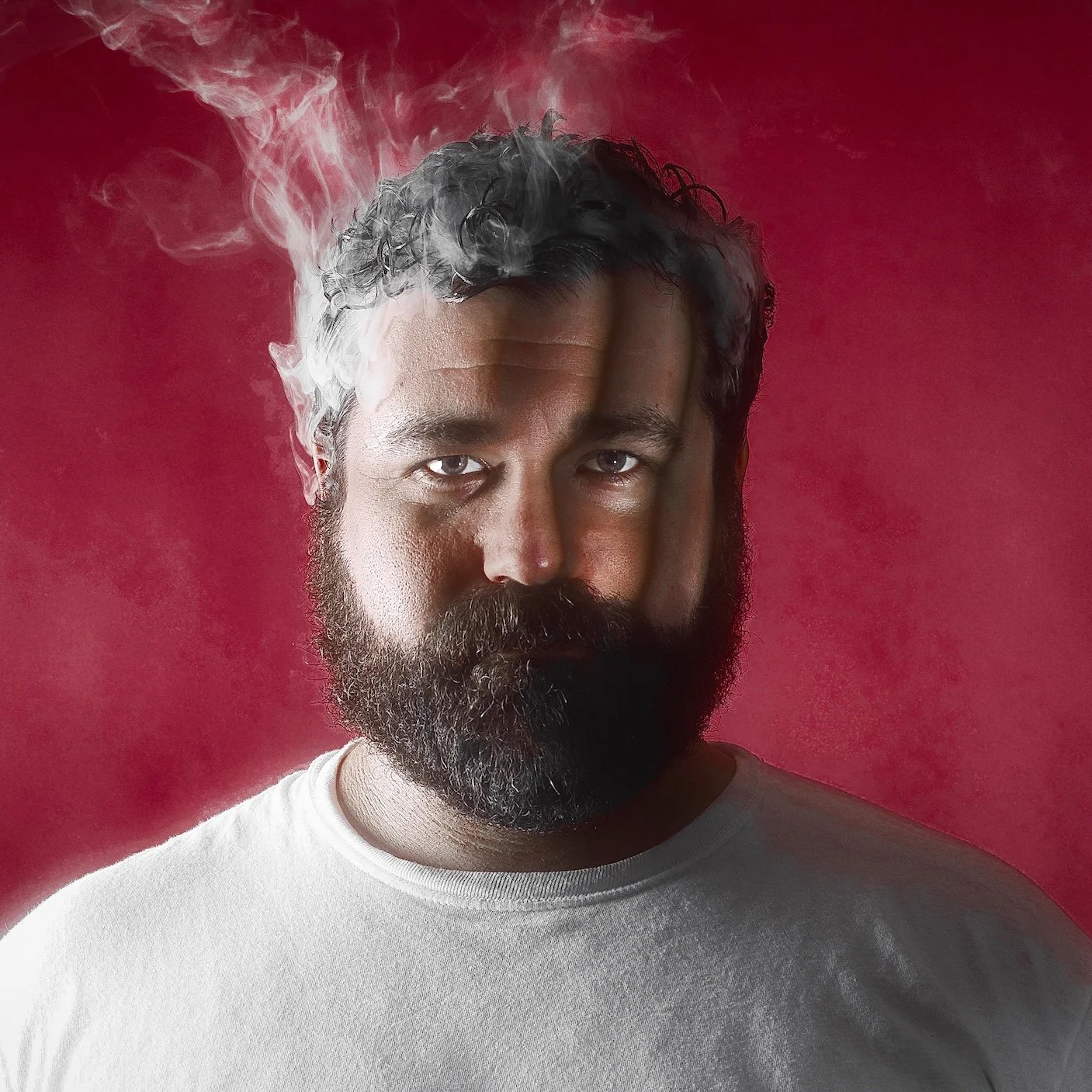
Brian Wangenheim, Self-Portrait, North Hollywood, CA (March 2026)
Overview
This image is a recent self-portrait created in a small home studio in North Hollywood. The goal was to experiment with newly acquired lighting equipment while producing a controlled, cinematic portrait using smoke, directional light, and post-processing techniques.
The image demonstrates how a minimal studio setup can create a complex visual result when lighting direction, modifiers, and atmosphere are intentionally controlled.
Lighting Setup
1. Key Light (Primary Shape of the Portrait)
The main light source was positioned camera-right.
Equipment and configuration:
Strobe with grid modifier
Positioned slightly forward and to the right of the subject
Aimed toward the face to create directional shadow
Purpose of the grid:
Restricts light spread
Prevents light from spilling onto the background
Creates high contrast facial modeling
The grid produces a tight beam, emphasizing facial structure and texture in the beard and skin.
2. Snoot Light (Linear Pattern Across the Face)
A second light used a snoot modifier.
Position:
Aimed toward the front of the face
Narrow beam directed across the center of the face
Purpose:
Create a controlled strip of light
Add graphic structure to the portrait
Break up the symmetry of the lighting
This produces the vertical band of illumination seen across the face.
3. Background
The background is a red seamless backdrop.
Reason for using red:
Creates strong contrast against neutral skin tones
Enhances the cinematic feel of the portrait
Works well with smoke effects
No background light was used; the color remains saturated because spill from the key light was minimized by the grid.
Atmospheric Effect (Smoke)
The smoke effect was created using a Colbor smoke machine.
Process:
Turn on the smoke machine.
Apply dense fog above the head.
Quickly step into position.
Trigger the camera remotely.
The smoke interacts with the directional lighting and creates:
visible light rays
halo-like diffusion around the hair
depth separation between subject and background
Because the smoke dissipates quickly, timing is critical.
Camera Operation (Self-Portrait Method)
The portrait was captured using a remote trigger held in hand.
Challenges of self-portrait photography:
framing without a photographer behind the camera
timing smoke deployment
triggering the camera while maintaining expression
In portrait work, small details determine success:
eye direction
tension in facial muscles
micro-expressions
head tilt
When photographing yourself, you must manage both the technical setup and the performance simultaneously.
Post-Processing Breakdown
Significant post-production work was applied to shape the final image.
Key adjustments included:
Channel Manipulation
black and white channel adjustments
selective color channel refinement
Purpose:
increase tonal separation
control contrast in skin tones
maintain strong red background saturation
Contrast and Tone
highlight shaping in smoke
shadow control in beard and hair
subtle sharpening to retain texture
Color Balance
warming of skin tones
preservation of red background intensity
controlled desaturation of neutral areas
The goal was to maintain realism while enhancing visual impact.
Why Self-Portraits Are Useful Experiments
Self-portrait sessions provide a controlled environment to test:
lighting modifiers
atmospheric tools
new gear
color grading techniques
They remove scheduling variables and allow full experimentation.
In this case the image began as a lighting test but became a finished portrait.
Portrait Photography in Los Angeles
This experiment demonstrates what is possible with a controlled studio environment and deliberate lighting design.
When photographing a client instead of yourself, the process becomes significantly easier:
both hands free to adjust lighting
direct control of subject positioning
ability to refine expression in real time
faster iteration between shots
The result is greater precision in shaping the final portrait.
Book a Creative Portrait Session
If you are in the Los Angeles area and want a highly stylized portrait, experimental lighting portrait, or creative studio image, sessions can be arranged through the contact form on this site.
For direct inquiries, message on Instagram or submit a request through the website contact page.
Custom portrait sessions can include:
cinematic lighting
smoke effects
experimental lighting modifiers
editorial or fine-art style portraits
This type of portrait work combines studio lighting control with artistic direction to create images that stand apart from standard headshots.
